Atlanta topography and dense deciduous tree canopies create microclimates that sustain mosquito activity from April through late October. Neighborhoods featuring mature hardwood growth and historical stone…
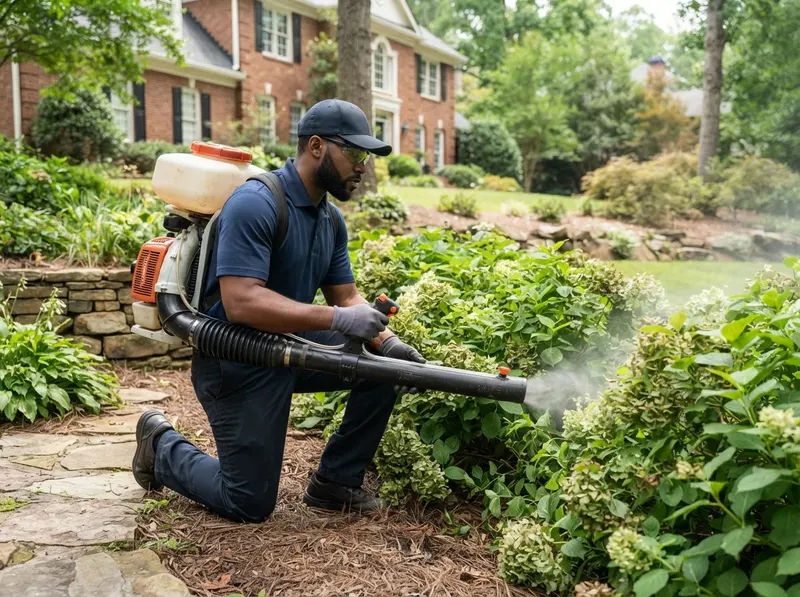
Atlanta topography and dense deciduous tree canopies create microclimates that sustain mosquito activity from April through late October. Neighborhoods featuring mature hardwood growth and historical stone architecture, such as Virginia-Highland, Inman Park, and Grant Park near the Zoo Atlanta grounds, consistently retain pockets of stagnant water in clogged box gutters, shaded English ivy beds, and natural drainage swales. Standard retail foggers disperse unbonded pyrethrins that degrade within 48 hours under direct sunlight and high ambient humidity. A clinical approach targets resting microhabitats on the undersides of broadleaf shrubs, groundcover beneath tree lines, and structural soffits using micro-encapsulated synthetic pyrethroids designed to bind to foliage for 21 to 28 days without washing away in typical southern afternoon thunderstorms.
Controlling mosquitoes across properties in Midtown, Old Fourth Ward, and Cabbagetown requires strict separation between adult knockdown and juvenile source reduction. Applying juvenile hormone mimics or Bacillus thuringiensis israelensis (BTI) tablets into localized standing water, such as French drains, foundation sumps, decorative urns, and catch basins along city easements, destroys mosquito larvae within 24 hours before pupation occurs. Adult perimeter treatments fit properties where dense property lines border urban parklands like Piedmont Park or Historic Fourth Ward Park. The operational trade-off of whole-yard barrier sprays centers on coverage volume versus botanical preservation: misting must coat the deep underside of harborage leaves up to 10 feet high while leaving flowering pollinator plants completely untreated.
Suburban lots in Buckhead Forest, Collier Hills, and the West End frequently face water intrusion and poor yard runoff due to dense clay soil. A one-time knockdown application provides temporary adult reduction for outdoor gatherings but fails to stop emerging instars already pupating in damp substrate. Lasting population suppression requires structured 21-day or 30-day perimeter refresh intervals throughout the warm season, paired with the structural removal of moisture reservoirs under crawlspace access points and low-pitch deck framing. Properties with dense bamboo groves, as seen throughout East Atlanta Village, require higher chemical flow rates to penetrate vertical leaf layers where adult mosquitoes shelter during daylight peak heat.
Every job gets a firm, written price after a free on-site visit.
Tell us about your mosquito control job in Atlanta and we'll send a clear, written quote, usually the same day.
 PestSentry Pest Control