Urban tree canopies and mature hardwoods directly adjacent to rooflines in Virginia-Highland, Inman Park, and Buckhead Forest create natural conduits for roof rats to breach fascia boards, dormer returns, and ridge…
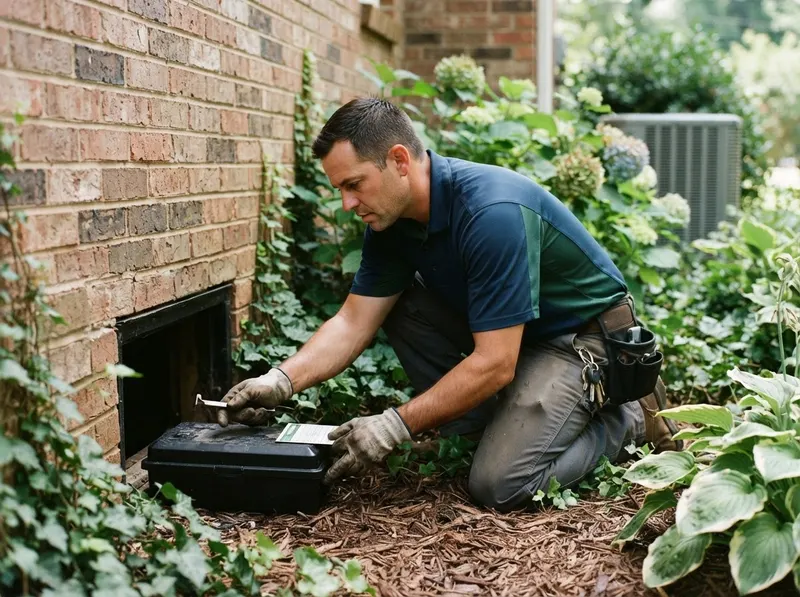
Urban tree canopies and mature hardwoods directly adjacent to rooflines in Virginia-Highland, Inman Park, and Buckhead Forest create natural conduits for roof rats to breach fascia boards, dormer returns, and ridge vents. In ground-level crawlspaces and stone-masonry foundations across Grant Park, Cabbagetown, and the West End, Norway rats exploit compromised foundation vents, uncapped plumbing chases, and historic brick mortar gaps as narrow as 0.5 inches. Rodent control requires identifying these structural compromises rather than placing temporary interior retail traps, which address transient individuals while leaving primary access pathways open.
Interior population extraction utilizes weighted, mechanical strike traps and enclosed monitoring chambers placed along interior travel routes, baseboard voids, and ceiling joist runs. Rodenticides are prohibited within open living quarters to prevent carcass decomposition inside wall cavities and avoid secondary toxicity hazards for domestic pets. Attic insulation contaminated by urine trails and pheromone markings is evaluated for bio-sanitization, as residual rodent pheromones actively draw novel colonies into the structure long after the primary nesting population has been removed.
Structural exclusion establishes an impassable perimeter using 16-gauge galvanized steel hardware cloth, elastomeric caulking compounds, and custom metal flashing. If a structure exhibits localized utility penetrations, mechanical sealants and wire mesh sleeves provide barrier defense; if the home features continuous open eaves or expansive crawlspace perimeters common in historic Collier Hills, full-perimeter architectural remediation is required. The operational trade-off is focused mechanical sealing versus continuous bait monitoring: trapping resolves active populations inside 7 to 14 days, but physical exclusion remains the singular determinant of multi-season structural integrity.
Every job gets a firm, written price after a free on-site visit.
Tell us about your rodent control job in Atlanta and we'll send a clear, written quote, usually the same day.
 PestSentry Pest Control